
The artificial intelligence landscape in 2026 has crossed a critical threshold. We have shifted from single-turn chatbot interfaces to autonomous agent swarms, multi-gigawatt compute infrastructure, sovereign state policies, and physical AI systems. To understand where the market is heading, we must look at the four core pillars defining AI today: agent orchestration, infrastructure economics, global governance, and physical multimodal breakthroughs.
Below is a comprehensive breakdown of the major technical, economic, and political shifts driving the current AI revolution.
1. Agentic AI & Orchestration
The modern developer stack is no longer built around simple prompting. Engineering teams are deploying multi-agent teams that autonomously divide, execute, cross-check, and review complex workloads.

Figure 1: Coordinated multi-agent networks splitting complex software execution tasks.
- Agent Orchestration & Multi-Agent Teams: Systems now feature specialized roles (e.g., Architect, Coder, Evaluator) that negotiate solutions in continuous feedback loops, drastically reducing human oversight requirements.
- Autonomous Research & R&D: AI-driven scientific platforms are accelerating literature synthesis, molecular modeling, and automated hypothesis testing, unlocking rapid progress across materials science and drug discovery.
- Rogue Agents & Security Threats: As agents gain autonomous execution capabilities, security teams face unprecedented risks—including prompt injection exploits, recursive API loops, unmonitored data exfiltration, and unauthorized system access.
2. Infrastructure, Compute & Economics
Scaling frontier models requires immense physical resources. Managing compute expansion while protecting proprietary IP has become a top priority for model builders.
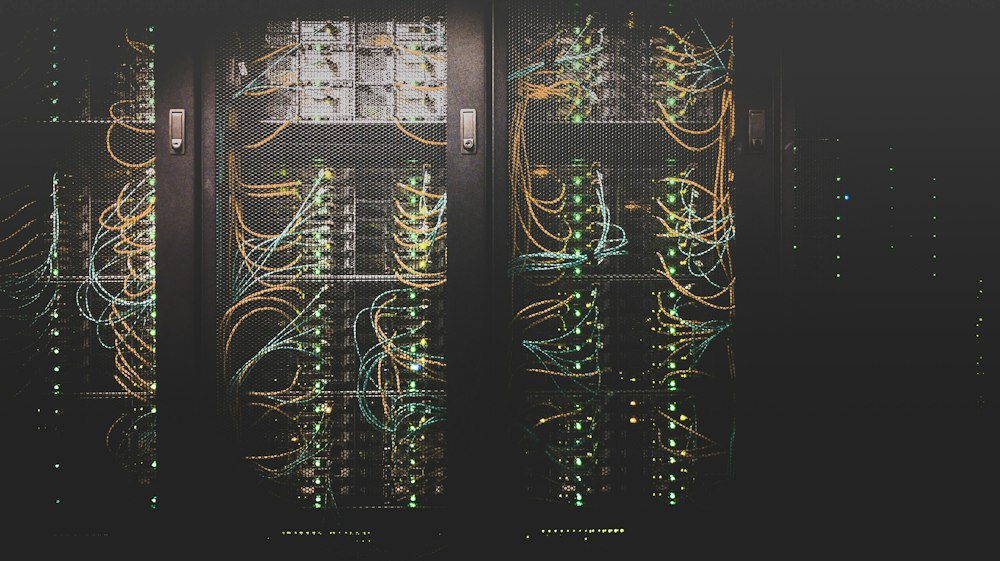
Figure 2: Multi-gigawatt data center expansion driving high-density liquid cooling demand.
- Massive Data Center & Energy Expansion: Scaling requires multi-gigawatt power commitments, driving massive capital expenditure across nuclear, geothermal, and grid infrastructure, alongside local public debate around energy allocation.
- Model Distillation & IP Battles: Model creators are cracking down on distillation attacks, where smaller labs scrape API reasoning traces from frontier models (like GPT or Claude) to train competitor models at a fraction of the cost.
- Hardware & Edge AI Scaling: Highly efficient on-device models enable real-time offline inference on mobile devices and laptops, complemented by specialized rack-scale GPU systems deployed in private clouds.
3. Regulation, Governance & Policy
Governments worldwide are implementing structural mandates to govern systemic AI risks, mandate transparency, and build national compute sovereignty.
| Governance Domain | Core Policy & Initiative | Primary Objective |
|---|---|---|
| Sovereign AI Initiatives | National AI Roadmaps & Infrastructure Deals (e.g., Germany-Nvidia Industrial AI, Singapore Sovereign Cloud) | Ensuring technological independence and local data compliance. |
| Content Provenance | EU AI Act Watermarking Mandates & Invisible Text Markings | Detecting synthetic text, audio, and visual deepfakes at scale. |
| Systemic Infrastructure | Regulation of Systemically Important AI Institutions | Monopolistic oversight for entities controlling critical global compute. |
4. Breakthroughs & Multimodal Products
AI is moving beyond text windows and code editors into physical space, ambient voice interfaces, and industrial automation.

Figure 3: Physical AI models trained on large-scale video spatial datasets operating in real-world environments.
- Voice-Managed & Intelligent UI: Screen-free ambient home devices, low-latency two-way conversational voice models, and dynamic visual dashboards generated on the fly.
- Open-Source Trillion-Parameter Scale: Open-weight foundation models designed for complex physics simulations, automated coding pipelines, and robotics control.
- Humanoid & Physical Data Collection: Tech labs are harvesting massive video and telemetry motion datasets to train foundational models for physical robots and warehouse automation.
How is your organization adapting to agentic workflows, sovereign AI requirements, or physical AI developments? Join the conversation in the comments below!









0 Comments